Jan 05 2009

Afghanistan is a Complex Place

Afghan local points something out to Western soldiers

(photo from Ghosts of Alexander)

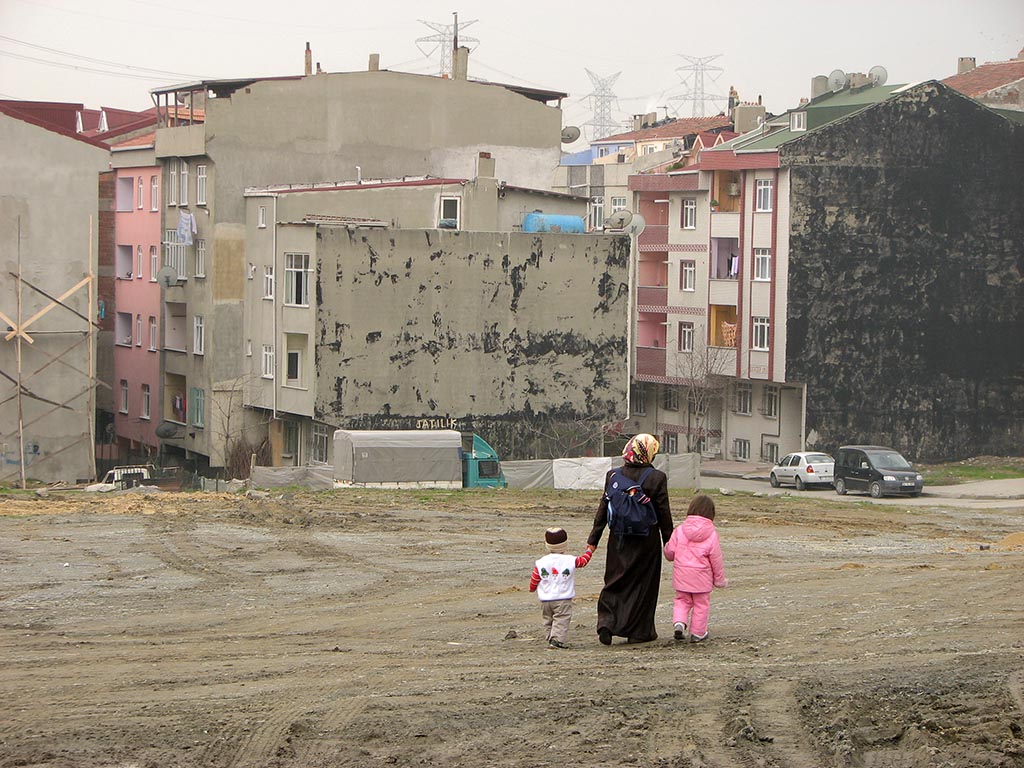
Actually, all places are complex. It’s hard to understand what this means if you’ve only spent time in your own culture, especially if it’s a reasonbly functional first-world democracy. The developing world in particular can be phenomally fluid and mystifying, and one of the feelings I associate most intensely with travel there is the sense that not all is as it seems, that I can’t quite grasp the true motivations and power relations of the people around me. In my more paranoic moments I even suspect that my interactions are, to some extent, stage-managed by the locals so as to give me a particular impression.

If a recent article by a sociologist studying Afghanistan is any indication, I was right about all of this: the local socio-political scene is very complex, and it is deliberately hidden from “outsiders” of various types. The implications are dire for any sort of foreigner who wants to try to come in and “help.”

Continue Reading »

No responses yet

Dec 12 2008

How the Internet Can Fail

When television is good, nothing — not the theater, not the magazines or newspapers — nothing is better.

But when television is bad, nothing is worse. I invite you to sit down in front of your television set when your station goes on the air and stay there, for a day, without a book, without a magazine, without a newspaper, without a profit and loss sheet or a rating book to distract you. Keep your eyes glued to that set until the station signs off. I can assure you that what you will observe is a vast wasteland.

FCC Chairman Newton Minow gave this speech in 1961, decrying the state of the medium that many had hoped would bring new light to humanity. What is to say that the Internet will not sink into the same mediocrity?

There are differences, of course. The internet is (currently) very much an active, two-way medium; the internet is (currently) a very democratic place, where anyone can espouse their worldview to the whole world for only the effort of typing. And the internet is (currently) far too large and diverse to be effectively controlled by any particular corporate or goverment interest.

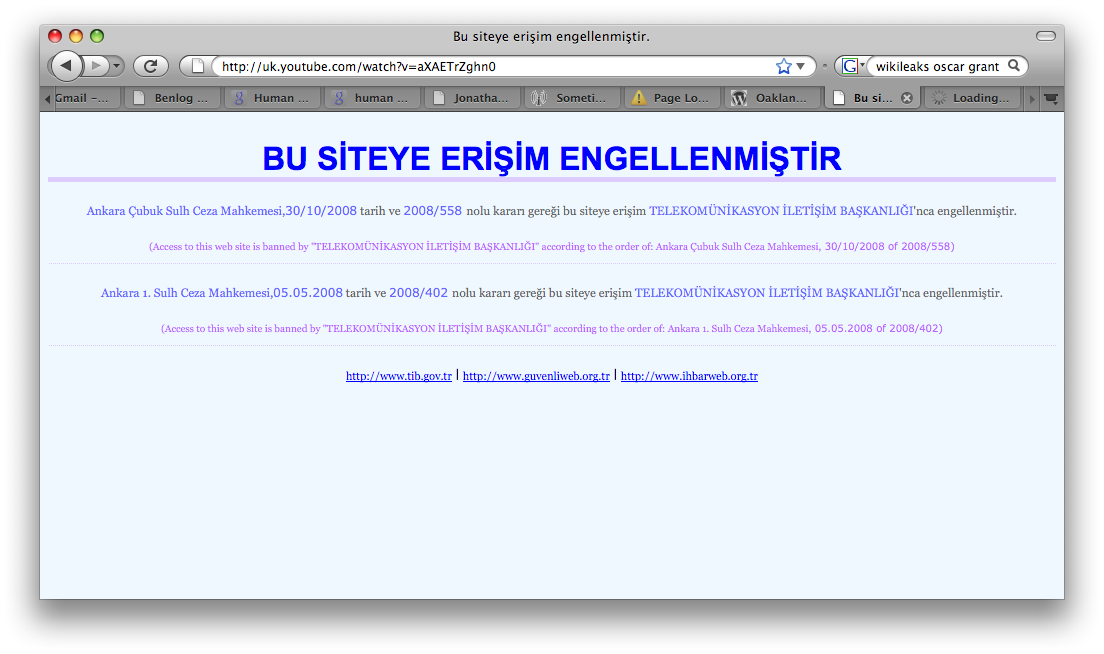
But I have a morbid interest in dystopia; and already I see signs that not everyone realizes what freedoms we could lose. Like bad science fiction, here are a few scenarios where the internet fails to live up to its almost obscene promise, where it becomes just another “vast wasteland.”

Continue Reading »

One response so far

Nov 28 2008

Kathmandu Questions

4 April 2008, to Jenafir

Children in Kathmandu

I’m in Kathmandu and thinking of you. I visited the Swayambhunath temple this afternoon, up on its hill overlooking the valley. Beautiful, absolutely beautiful, and it opened me up in the way only real beauty can, cut through all the jaded traveler in me. I haven’t been home since we worked together a year ago – you know that. It will be time for me to return to San Francisco soon. But what I wanted to talk to you about today is the two little boys that accompanied me to the temple and back.

Continue Reading »

No responses yet

Nov 19 2008

World Toilet Day

One of my friends has helpfully pointed out that today is World Toilet Day. According to the World Toilet Organization, fully 40% of the world’s people do not have access to proper sanitation facilities.

World Toilet Day \'08

We do deserve better; I for one don’t particularly enjoy squatting in the bushes. The World Toilet Organization agrees, and sponsors World Toilet Summits and World Toilet Expos, “wherein all toilet and sanitation organizations can learn from one another and leverage on media and global support that in turn can influence governments to promote sound sanitation and public health policies.” They also started the first World Toilet College, providing training in toilet design, maintenance, school sanitation, disaster sanitation, and implementation of sustainable sanitation systems.

Okay, you can snicker now. I know I am.

This would be even funnier if it wasn’t actually serious — human waste is a major disease carrier if not handled correctly, and an awful lot of people are still just pooping on the ground or in the river. But let’s not dwell on negatives; in the carefree spirit of World Toilet Day, I thought I’d briefly discuss, and show some pictures, of the types of toilets I’ve encountered in various parts of the world. Travel yields many surprises, and, astonishingly, there were places where I had to learn to wipe my ass all over again. (”Don’t you know how to use the three seashells?” indeed.)

Continue Reading »

2 responses so far

Nov 10 2008

A Dozen Things You Notice About The Developing World

It’s very hard to understand the world in the abstract, without walking its cracked pavement or trying to have a conversation with someone impossibly different from you. Wikipedia defines a “developing country” as a nation “that has not reached Western-style standards of democratic government, free market economy, industrialization, social programs, and human rights guarantees for their citizens.” But this glossy language never prepared me for the things I saw almost immediately that first time I landed somewhere poor. This list is a primer for those who have not yet had the mind-blowing experience of stepping outside the castle walls.

Continue Reading »

One response so far

Oct 21 2008

We Are Not All One

At first I didn’t think much about other people.

I was doing very well for myself. It was not until my early twenties that I really failed at something I wanted. I had no friends who weren’t much like myself — white, well educated, happy childhoods, culturally Western.

A woman named Crazy Kim disabused me. She runs a bar in the seaside town of Nha Trang, but that’s now. One night she told me about her student days in communist Vietnam, the way she used to get out of mine clearing duties by pretending to be sick. On the day before she was to graduate, she set out to sea in a small wooden boat. She was lucky; she got picked up by a passing freighter bound for Holland. Twenty years later, she had to apply for a Vietnamese passport to return home, so thoroughly had her birth country forgotten her. Now she uses the revenue from the bar to fight pedophile tourists who come for the young girls.

She was the first person I’d ever met with real problems — not problems like getting a job or wishing someone would call you back, but problems like surviving on a boat at sea and starting a new life in a new country. She’d overcome all of this, and talked about it like it was normal. It was normal to her, the only life she’d ever known, and after all that she’d decided that what she really wanted to do with her days was help other people out. I felt like she was living more life than me. My heart went out to her. After a few more shots, my heart went out to everyone in her little bar, tourists, locals, all of them. I leaned into my neighbor and told him that I loved everyone I’d ever met.

The epiphany outlasted the hangover. Why shouldn’t everyone in the world be happy? Why shouldn’t I extend the benefit of the doubt to everyone I meet? Hell, we all want the same things, right? I began to see that peaceful people before me had scratched “LOVE” into wooden surfaces everywhere. The guest-house guest-books were filled with “all we have in this world is each other” and “live life today!” and “We are One!”

It’s the basic realization of compassion.

What astounds me is that I’ve heard it over and over again from people of all cultures. A stoic Ethiopian on a bus told me about his principle that all humanity is united. A passionate journalist from Dakar has expounded to me that we cannot afford to see ourselves as different. Over tea on the streets of St. Louis, a young mullah explained to me patiently that all are equal in the eyes of Allah. And of course I’ve been on the other stool so many times now, with a drunken Thai or Nigerian or Russian all but drooling on me in their eagerness to explain that they’ve realized something amazing: we are all merely human!

And you can look into their eyes, the eyes the person across the table from you, across that gulf of experience and education and culture and attitude that you just can’t bridge, and you know you’re supposed to feel a deep human connection somehow.

Then the bastard shatters it by asking you for money to beat his wife. Or something.

Because I don’t really know what to say to that Lebanese guy who talks about his African servants as “idiots.” I was astounded at how often the Hong Kong Chinese wouldn’t take my order if I couldn’t speak Cantonese, and more than one Moroccan man once told me to “go back to your hell!” For every beautiful soul I met along my way, there was an asshole who wanted nothing more from me than whatever he could get.

The stereotypes are what killed me most. I wanted to keep an open mind; I was enlightened and I knew that the terrible things I’d heard were the rantings of bigots; they couldn’t possibly have any truth to them. So it was with some dismay that I began to see that Germans really are uptight, that Indian merchants would lie to my face if it made them a buck, that Africans would heap scorn on Africans just one shade darker then them. (Also, the Chinese really are atrocious drivers.) These aren’t universal principles, of course. Like all stereotypes they are no substitute for looking at the person in front of you. Yet I found myself with opinions–

And you discover you’re wrong about what’s important. My mother always told me that everyone in the world wants the same things: family, food, shelter. No. It’s not true. The things that drive us differ. Depending where you live, the most important thing in your world might be allegiance to your father, or Allah, or ridding the province of Pakistanis, or making enough money to buy an air conditioner. We are not all one.

The first step is always to ask, why can’t we all just get along? This the is the moment where you take to heart the idea that everyone is deserving, at least in principle, of your love, compassion, and good will. You suddenly see that this is what peace and cooperation are, that civilization itself is built upon extending humanity and generosity to others. I am with the sages and the hippies in shouting from the rooftops that this is a Good Thing. But it’s not enough, because not everyone wants what you want. In fact, a great many people aren’t even remotely similar to you, and in ways that will probably upset you.

There has to be a form of compassion that embraces the world as it is, not as we wish it was.

No responses yet

Oct 20 2008

In The Suburbs

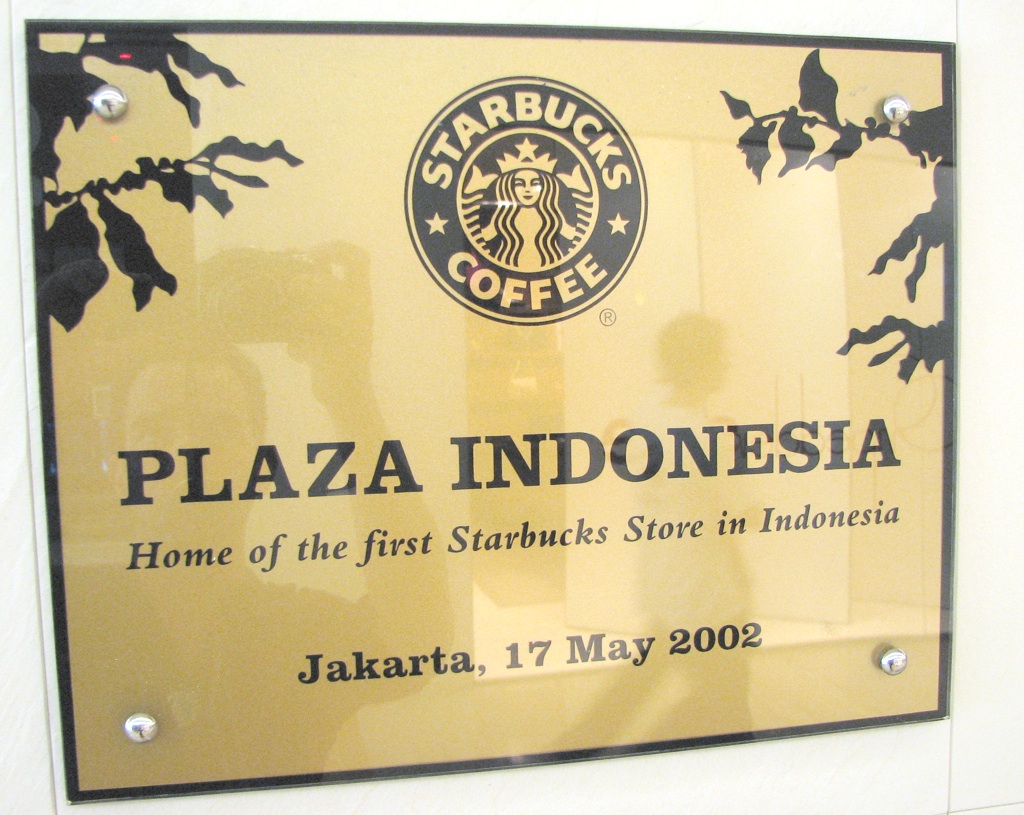
Jai told me that everyone in Siliguri was crazy about the new mall that opened there. He hastened to assure me that he personally wasn’t all that impressed, being from more developed Punjab state, but he took me there anyway. It was big and white and air conditioned and full of the usual global chain stores (Adidas, Sony, Starbucks.) Compared to the dirt markets of traditional India, it struck me as surprisingly bland and expensive– but also clean and comfortable. So badly did the locals want to see it on opening day that the security guards had to physically keep the crowds out, letting in only those who actually had money to buy.

America was once this way. Witness the 1957 promotional film In The Suburbs, courtesy of the Internet Archive:

Yes, this is real. Was real, an icon and instigator of the shining consumer culture that Kerouac critiqued even in its nascent state. Today, the notion of the white plastic suburban wasteland is so mainstream in the West that we can easily forget its intrinsic appeal; modern marketing is all about being unique and different, but it was once enough just to be new and middle class.

But the other billions still want this! They want to drive their new cars (thank you Tata) to the new mall. In the developing world, Middle Class is the holy grail. It’s a deep, almost universal aspiration that seems shallow to us only because we already have it. While I drink imported wine with my friends and ponder global economics, neuroscience, and avant-garde electronic music, most of the world just wants to be rich enough to shop somewhere air-conditioned — and in quantity.

The shopping centers see these young adults as people whose homes are always in need of expansion. People who buy in large quantities, and truck it away in their cars… It’s a happy-go-spending world!

No responses yet

Oct 14 2008

World Peace, Really

The beauty pageant answer; the cliche along with rocket science and brain surgery. World Peace. Give Peace a chance. Marches and diplomats; the glib and holy grail. The fine ambitious scent of ambassador’s parties and the scandals of diplomacy. Presidents smile whitely as Arafat and Rabin shake hands.

It’s not like that on the ground. Jody sleeps under a mosquito net and has never been on television, as far as I know. It’s a maddeningly hot, humid night in the ever-sweltering lowlands of Gambella. Tomorrow morning Jody will get up and walk along mud streets to the little three-room PACT office. Gambella has a history of tribal conflict, and…

How to describe a place I don’t understand myself? She drew a little chart for me once, all of the ethnic groups and sub-groups here, all of the shifting and diffuse allegiances. Sometimes you can tell a Nuer from an Anuak by the facial scars — three thin lines across the brow for Nuers, traditionally — but often not. But it’s a small town, right? Everyone knows everyone else, or at least their families. Everyone’s on some side of some line. Or lines. To be neutral is to be without identity.

Jody’s job is “peace building.” She works for an international NGO called PACT. Check the old news on Gambella, what you can find of it — it would have been utterly buried before Google, I’m sure. In January 2004 there was a massacre, said to be Anuaks killing Nuers. The Anuaks in question were maybe retaliating against previous killings by government peacemaking troops. That in turn was retaliation against the killing of eight highlander (government) personnel in a land rover a few months prior. Maybe. I don’t know exactly what happened. Nobody knows exactly what happened. There aren’t any newspapers in Gambella, and not many people could read them if there were. So it’s all heresay, and it all depends who you ask. Two hundred people were killed. Maybe raped.

Continue Reading »

No responses yet

Oct 05 2008

Jai of Siliguri

Jai is mad about his Pulsar. It’s a 180, a big bike to start with, but he’s put a decal on it that says 200, a perfect forgery of the factory sticker. He says people stop him in the street ask him about it, even take pictures. Standing in the dirt at the side of the road, waiting for the mechanic to install a new and louder muffler, he gestures at the busy main street.

“What’s the fastest you’ve ever driven on this road?”

The street is full of cars, trucks, cows, bikes, bicycles, pedestrians, oxcarts, everything. I tell him, well, the traffic moves at about 40 kilometers an hour.

“I’ve gone 87,” he grins. Then a grimace. “It’s not a good idea.” But you can see how he really feels about it.
Continue Reading »

No responses yet

Sep 10 2008

Too Safe, Too Funny

In the post Is Safer Always Better? I argued that modern Western Civilization, especially American civilization, has become obsessed with safety to the point of absurdity. I think I now have definitive proof. Johnson & Johnson has produced, for the benefit of single mothers and tort lawyers everywhere, a booklet on how to walk safely:

Apparently this was distributed to all J&J employees, perhaps in the hope that no one would sue for slipping on the immaculately maintained non-slip flooring. Let’s peruse, shall we? Continue Reading »

3 responses so far

Next »